When a heat wave hits, the instinct is to crank the air conditioner and brace for the bill. But your AC is one of the biggest electricity users in the house, while a ceiling fan sips power. Used together the right way, they keep you comfortable for a fraction of the cost. Here’s how ceiling fans and air conditioning really compare, and how to combine them so you stay cool without dreading your next statement.
How Much Energy Each One Actually Uses
The gap is enormous. A central air conditioner can draw around 3,000 watts or more while running, and even a window unit pulls several hundred to over a thousand watts. A ceiling fan, by contrast, typically uses somewhere between 15 and 75 watts on its usual settings—roughly the same as a couple of light bulbs.
That means running a ceiling fan for hours costs pennies, while running the AC for the same stretch can cost many times more. The catch is that they don’t do the same job, which is the key to using them together.
Fans Cool People, Not Rooms
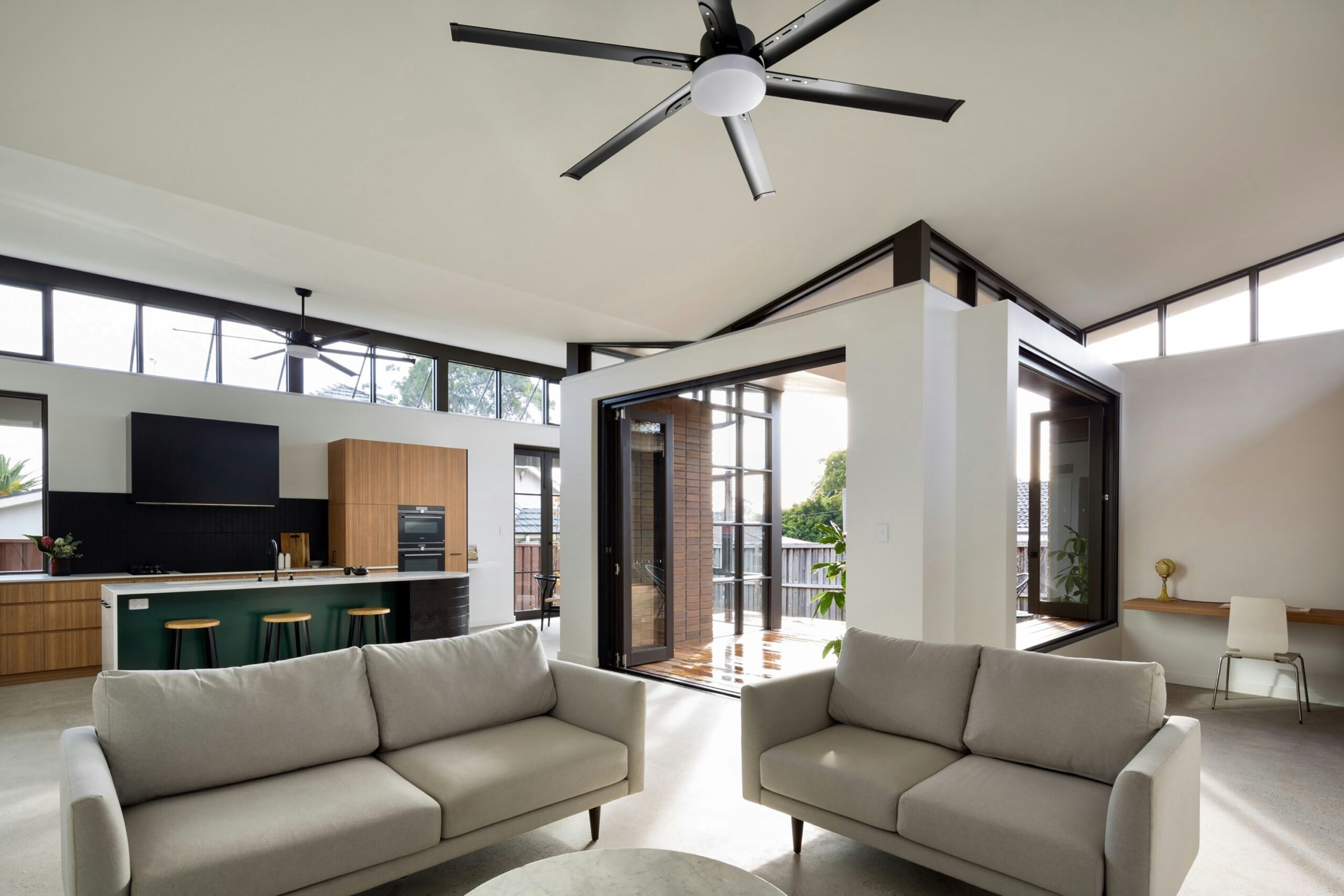
An air conditioner lowers the actual air temperature of a space. A ceiling fan does not—it moves air across your skin, which speeds up evaporation and makes you feel several degrees cooler than the thermometer reads. This is called the wind-chill effect, and it’s why a fan feels great when you’re in the room and does nothing once you leave.
The practical takeaway: never run a ceiling fan in an empty room. It’s not cooling the space, only the people in it, so leaving it on wastes power for no benefit.
The Smart Combo: Fan Plus a Higher Thermostat
Here’s where the savings happen. Because a fan makes you feel about 4°F cooler, you can raise your AC thermostat by roughly that much and feel the same comfort. Nudging the thermostat up a few degrees while a fan runs can noticeably cut cooling costs, since the compressor cycles on less often.
Set the fan to spin counter-clockwise in summer (you should feel a direct downward breeze), turn it on in rooms you’re actually using, and let a higher thermostat setting do the heavy lifting on your bill. A programmable or smart thermostat makes this effortless by nudging the temperature up automatically when you’re away or asleep.
When a Fan Alone Is Enough
On mild or moderately warm days—think spring, early summer evenings, or dry climates—a ceiling fan by itself is often all you need. Combined with a few no-cost habits, you can skip the AC entirely:
- Close blinds and curtains on sun-facing windows during the day.
- Open windows at night and in the early morning to flush out heat.
- Run kitchen and bathroom exhaust fans to push hot, humid air outside.
- Switch to LED bulbs, which throw off far less heat than old incandescents.
Reserving the air conditioner for genuinely hot, humid days is one of the simplest ways to trim summer energy use.
Getting the Most From Your Ceiling Fan
A few small choices make a fan more effective. Size it to the room—a larger blade span moves more air in big spaces—and mount it so blades sit about 8 to 9 feet above the floor for the best breeze. Keep the blades clean, since dust drag makes the motor work harder. And if you’re replacing an old fan, look for an ENERGY STAR model, which moves more air per watt than a standard one.
Fans also pair well with the rest of an efficient home. If your house still feels hot no matter what you do, the problem may be heat pouring in through gaps and thin insulation—our home insulation guide covers how to seal that up.
The Bottom Line
Ceiling fans and air conditioners aren’t rivals—they’re a team. The fan cools you cheaply and lets you push the thermostat higher, while the AC handles the days that are genuinely too hot to manage with airflow alone. Run fans only in occupied rooms, spin them counter-clockwise for summer, and lean on them to keep the compressor off longer. For more easy ways to shrink your bills year-round, see our guide to proven ways to lower your electricity bill.