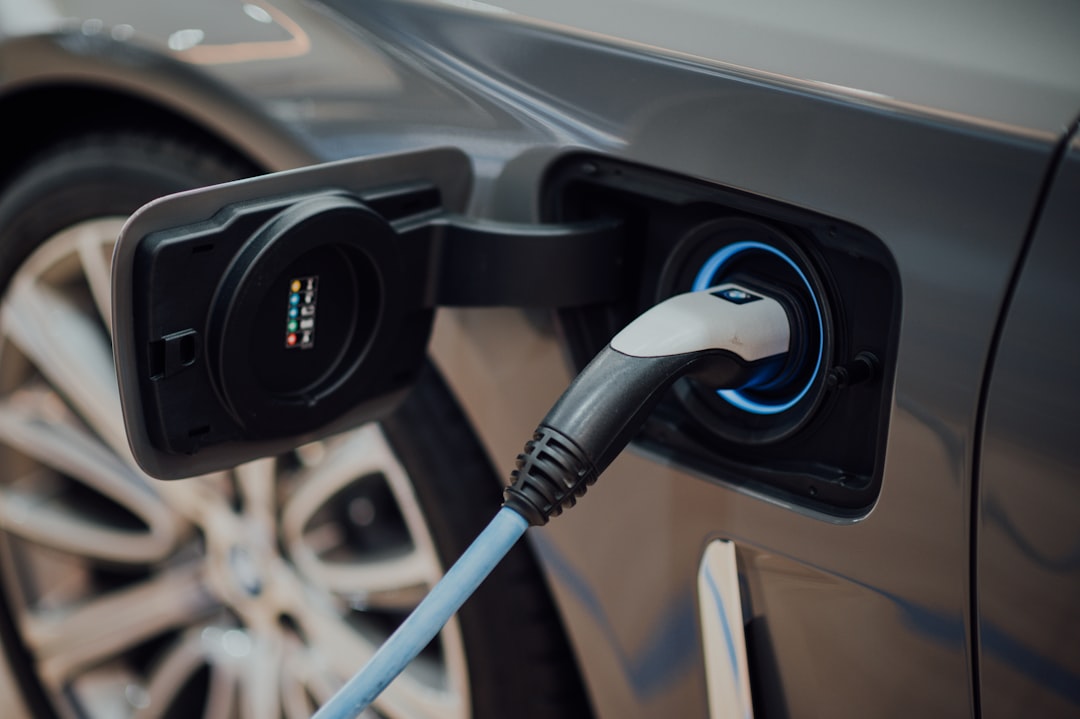
Ask three electricians to quote a Level 2 charger for your garage and you may get three numbers that are hundreds of dollars apart. That is not because someone is trying to overcharge you. Home EV charger installation is one of those jobs where the price is driven almost entirely by conditions already inside your walls: how far the charger sits from your electrical panel, how much spare capacity that panel has, and whether the wire has to cross a finished ceiling or run along an exposed garage stud.
Here is a realistic breakdown of what the work costs, where the money goes, and which line items you can actually influence.
What a Typical Installation Costs in 2026
For a straightforward job — a modern home with 200-amp service, panel in the garage, charger mounted within about 15 feet of it — most homeowners land somewhere between roughly $500 and $1,500 all in, including the charger. Industry installation surveys put the median all-in project closer to the $1,200 to $1,700 range once you average in the messier homes.
The harder installs are where the range blows open. A charger on the opposite side of the house from the panel, in a home with 100-amp service and a full breaker box, can realistically reach $3,000 to $5,000. Treat any single “average cost” number you see online with suspicion — the spread is the story.
A rough way to think about the parts:
- The charger unit: roughly $200–$800 for a reputable Level 2 unit
- Labor: commonly $400–$1,200 for a normal run
- Materials: $50–$300 for breaker, conduit, wire and mounting hardware
- Permit and inspection: often $50–$300, depending entirely on your municipality
- Panel or service upgrade, if needed: the big variable, frequently $1,500–$4,000
Distance From the Panel Is the Biggest Controllable Cost
Copper wire heavy enough for a 40- or 50-amp circuit is not cheap, and neither is the labor to route it. Every extra foot adds material cost, and every wall, ceiling or slab it has to cross adds hours.
This is the one variable you genuinely control. If your panel is in the basement and you were picturing the charger at the far end of the driveway, ask your electrician what the quote looks like if you mount it on the garage wall nearest the panel instead. Charging cables are commonly 18 to 25 feet, which is usually enough to reach the car’s port from a less convenient wall. Moving the charger 30 feet closer to the panel can shave several hundred dollars off the job for the cost of walking a few extra steps.
The Panel Upgrade Question
This is the line item homeowners fear most, and the good news is that it is needed less often than people assume. A home with 200-amp service that heats with gas typically has plenty of headroom for a Level 2 charger. Homes with 100-amp service, electric heat, an electric range and an electric water heater are where capacity actually runs out.
Before you accept a quote that includes a service upgrade, ask the electrician to run a formal load calculation under the applicable article of the National Electrical Code. That calculation, not a glance at your breaker box, is what determines whether you have room. Two cheaper alternatives are worth raising:
- Dial the charger down. Nearly every Level 2 unit lets you set a lower amperage. A 24-amp charger still adds roughly 15 to 20 miles of range per hour — more than enough for typical overnight driving — and may fit in your existing panel without any upgrade.
- Use a load-management device or splitter. These share an existing circuit (often the dryer or range) with the charger so both never draw at once, avoiding a service upgrade entirely.
If a genuine upgrade is unavoidable, remember that the utility often has to replace the service drop and meter base too, which is part of why the cost climbs and why the timeline can stretch to weeks.
Permits, Inspection and Why DIY Is a Bad Idea Here
A hardwired Level 2 charger is a permanent 240-volt circuit, and virtually every jurisdiction in the U.S. and Canada requires a permit and a licensed electrician for that work. Skipping the permit is a false economy: unpermitted electrical work can void a homeowners insurance claim after a fire, complicate a future sale, and disqualify you from utility rebates that require proof of licensed installation.
Permit fees vary enormously by city, so ask your electrician whether their quote includes the permit and inspection or whether those land on you separately. Get it in writing.
Some homeowners sidestep hardwiring entirely by having an electrician install a 240-volt NEMA 14-50 outlet and then plugging in a portable charger. That can be slightly cheaper, keeps the charger movable if you sell the house, but plug-in units are generally considered less durable outdoors than a hardwired install.
The Federal Tax Credit Has Closed — Look Local Instead
This is the most important recent change, and a lot of older articles are still wrong about it. The federal 30C Alternative Fuel Vehicle Refueling Property Credit — worth 30% of the cost up to $1,000 for a qualifying home charger — was cut short by the One Big Beautiful Bill Act. Its termination date moved from December 31, 2032 to June 30, 2026. Property placed in service after that date does not qualify. If your charger went in before the deadline and your address fell in an eligible low-income or non-urban census tract, you may still claim it on the relevant tax year’s return; a tax professional can confirm.
State and utility programs are now where the money is, and they are very much alive. Examples verified through the U.S. Department of Energy’s Alternative Fuels Data Center include a $250 residential charger rebate in New Jersey, up to $500 from Consumers Energy’s PowerMIDrive program in Michigan, and up to $500 through a Southern California pilot program. Many utilities also offer a discounted overnight EV charging rate, which is often worth more over a decade than any one-time rebate. Our guide to state and federal EV tax incentives covers the vehicle-side credits alongside the charging ones.
Check your own utility’s website and the Alternative Fuels Data Center database before you book the job — some rebates require pre-approval and are forfeited if you install first.
How to Get a Quote You Can Trust
- Get three written quotes, and insist each one itemizes charger, labor, materials and permit separately
- Send photos of your panel’s interior and its label to each electrician before they visit — it speeds up an accurate estimate
- Ask specifically whether a load calculation was performed, and to see the result
- Confirm the breaker size and wire gauge match the charger you plan to buy, not the one they usually install
- If solar or a battery is on your five-year plan, mention it now; sizing the circuit once is cheaper than redoing it
If you are still deciding between charger types and speeds before you get to the money question, start with our broader home EV charging guide, then come back to budgeting.
The Bottom Line
Most homeowners with reasonably modern electrical service will spend somewhere in the four-figure-or-less range to get a Level 2 charger installed, and the single best lever they have is mounting it close to the panel. The scary quotes almost always trace back to a service upgrade — so before you accept one, insist on a real load calculation and ask whether a lower-amperage setting or a load-sharing device gets you there for a fraction of the price.
And do not budget based on the federal charger credit; that door closed on June 30, 2026. Your utility is the place to look now.
Prices, incentives and rebate programs change frequently and vary by state, province and utility. Treat the figures above as planning ranges, and confirm current costs with local licensed electricians and current incentives with your utility or a tax professional before committing.