Rooftop solar rarely lines up neatly with how you actually use electricity. Your panels produce the most at midday, when the house is empty, and produce nothing at 7 p.m. when the oven, the dryer and the TV are all running. Net metering is the billing arrangement that bridges that gap — it lets you push surplus power onto the grid and get credit for it later. Understanding how your utility handles those exports matters more than almost any other number in a solar quote, because it decides how much of your production actually turns into money.
What Net Metering Actually Is
The U.S. Energy Information Administration defines net metering as a utility billing arrangement that lets a customer reduce the volume of billed grid electricity by accounting for power they sold back during periods when their own generation exceeded consumption. In plain terms: the utility tracks both directions.
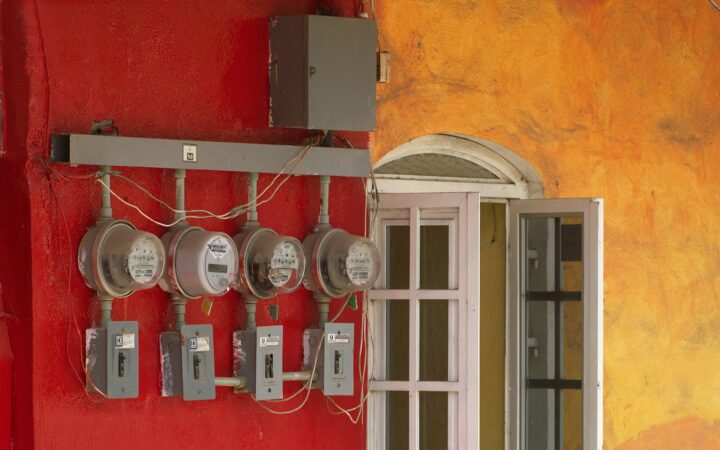
When you go solar, your old meter is typically swapped for a bidirectional meter that records two separate quantities — electricity imported from the grid, and surplus electricity exported to it. At the end of each billing period the utility nets the two together. Use more than you exported, and you pay for the difference. Export more than you used, and you build a credit.
That is the whole mechanism. Everything else — the arguments, the state-by-state differences, the reason your neighbor two states over gets a very different deal — comes down to one question: what is each exported kilowatt-hour worth?
Retail-Rate Credit vs. Net Billing
There are broadly two ways utilities value your exports, and the difference is large.
- True (1-for-1) net metering. Each exported kWh earns you a credit worth one kWh of consumption at the full retail rate. Export 10 kWh at noon, draw 10 kWh back at night, and the energy portion of your bill nets to zero.
- Net billing / avoided-cost credit. Exports are credited at a lower value meant to reflect what the power is worth to the grid at that moment, not what you pay for it. Imports are still billed at full retail. The gap between the two is real money.
California is the highest-profile example of the shift. Under its Net Billing Tariff — widely called NEM 3.0 — exports from customers of the three big investor-owned utilities are credited using hourly avoided-cost values set by the state regulator, rather than the retail rate. Industry analyses of the tariff put blended annual export credits in the range of roughly 5 to 8 cents per kWh, well below the retail rates those same customers pay for imports. Municipal utilities in the state, such as SMUD, set their own rules and are not covered by that tariff.
Other states sit in between, and some credit exports at close to wholesale value. Because these rules are set at the state and sometimes the utility level, the only reliable way to know yours is to look it up — the DSIRE database maintained by N.C. State is the standard public reference, and your utility publishes its own tariff sheet.
Rollover, True-Up and Expiring Credits
Even under generous programs, credits usually come with an expiry date. Most utilities let unused credits roll forward month to month, then perform an annual reconciliation — often called a true-up — where the year’s imports and exports are settled.
What happens to a leftover balance at true-up varies a lot:
- It is paid out in cash, usually at a low wholesale or avoided-cost rate
- It rolls into the new year
- It is simply zeroed out
That last outcome is why oversizing a system “just in case” can be a costly mistake. Building an array that generates 30% more than you will ever consume does not earn you 30% more value if the surplus expires unpaid each year. Sizing to your actual annual consumption is almost always the better economic call.
How It Works in Canada
Canadian provinces run their own programs, and several are more straightforward than what many U.S. homeowners now face.
Ontario’s net metering framework provides 1-for-1 credit for exported kilowatt-hours with a 12-month carryover, though credits offset only the electricity portion of the bill — delivery and regulatory charges still apply — and any balance remaining after 12 months resets to zero rather than being paid out in cash. BC Hydro similarly credits exports at the retail rate and rolls credits forward monthly, with any year-end surplus paid at a lower wholesale rate. As always, confirm current terms directly with your provincial utility before committing.
What This Means for Your Solar Decision
Net metering rules change the shape of a good solar investment, not just its payback period.
Under 1-for-1 retail credit, the grid effectively acts as a free battery. Timing barely matters; you just need annual production to match annual consumption. Under net billing, the calculus flips — power you consume the instant you produce it is worth full retail to you, while power you export earns pennies. That is why battery storage and load shifting have become much more central to solar economics in net-billing territory. If you are weighing that side of the decision, our guide to how home battery storage works and why it matters covers the tradeoffs in detail.
A few practical checks before you sign anything:
- Get the export rate in writing. Ask the installer to name the specific tariff, not just say “net metering.”
- Ask what happens at true-up. Cash-out, rollover or forfeit — it changes optimal system size.
- Check for grandfathering. Many states lock existing customers into the rules in force when they interconnected, often for 10 to 20 years. Interconnection deadlines matter.
- Look at fixed charges. Some utilities apply minimum bills or demand charges to solar customers that net metering credits cannot offset.
- Confirm who owns the credits. Under a lease or power purchase agreement, the answer is not automatically you — our comparison of solar leasing versus buying walks through what changes with each arrangement.
It is also worth remembering that the cheapest kilowatt-hour is still the one you never use. Trimming baseline consumption first — the kind of thing covered in our list of proven ways to lower your electricity bill — shrinks the system you need to buy in the first place.
The Bottom Line
Net metering is what turns solar production into bill savings, but the phrase covers a wide range of arrangements. Full retail credit makes the grid a near-perfect storage partner; avoided-cost net billing rewards self-consumption and makes batteries far more attractive. Before you commit to a system size or a contract, find your utility’s actual export rate, its true-up policy, and whether existing terms are locked in for new customers. Those three answers will tell you more about your real payback than any headline savings figure. Rates, tariffs and incentive programs change frequently and differ by state, province and utility — always verify the current terms with your own utility and state regulator before making a decision.